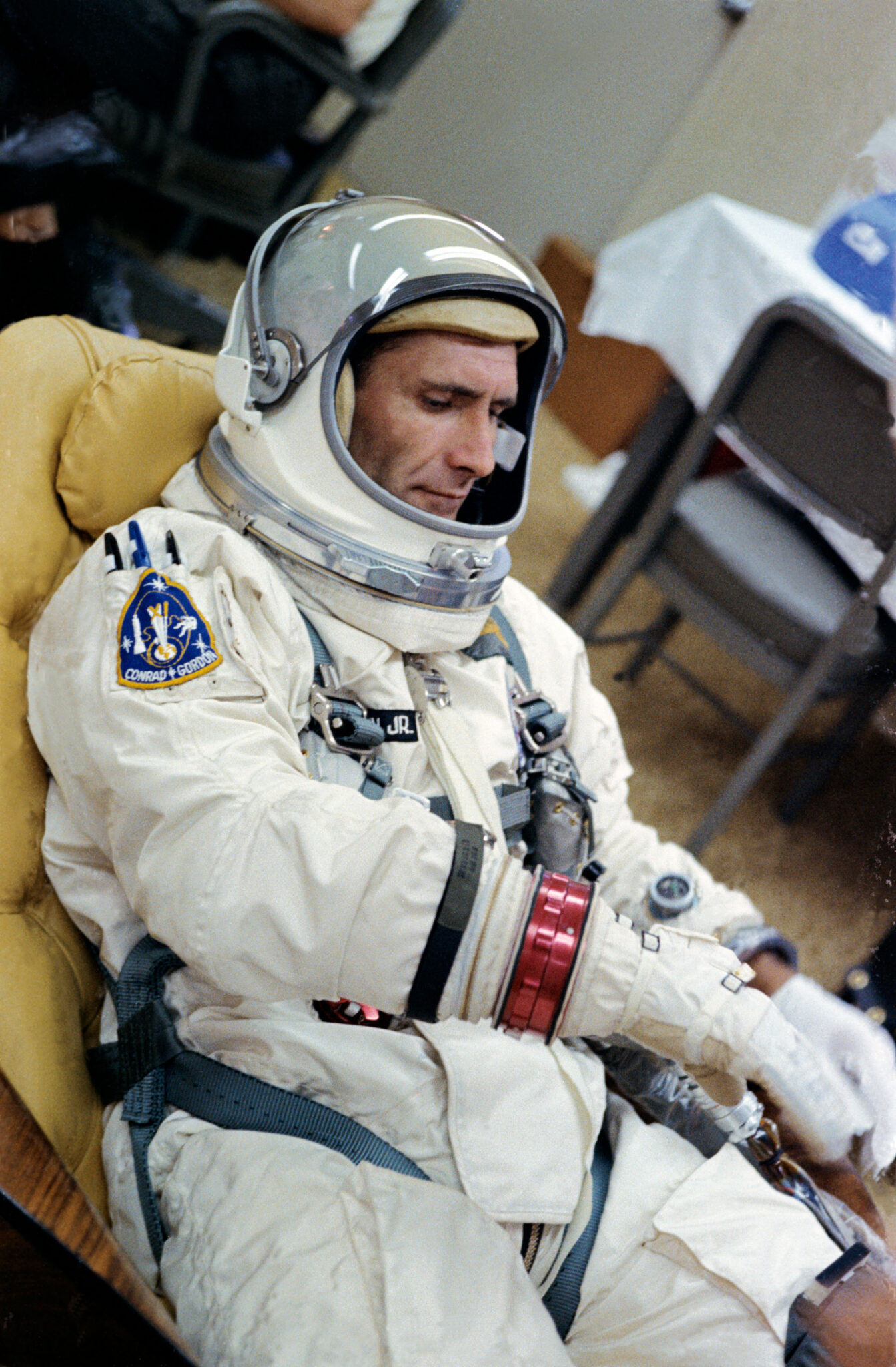
Dick GordonGemini XI · Apollo XII

Missions / Gemini XI

Gemini XI

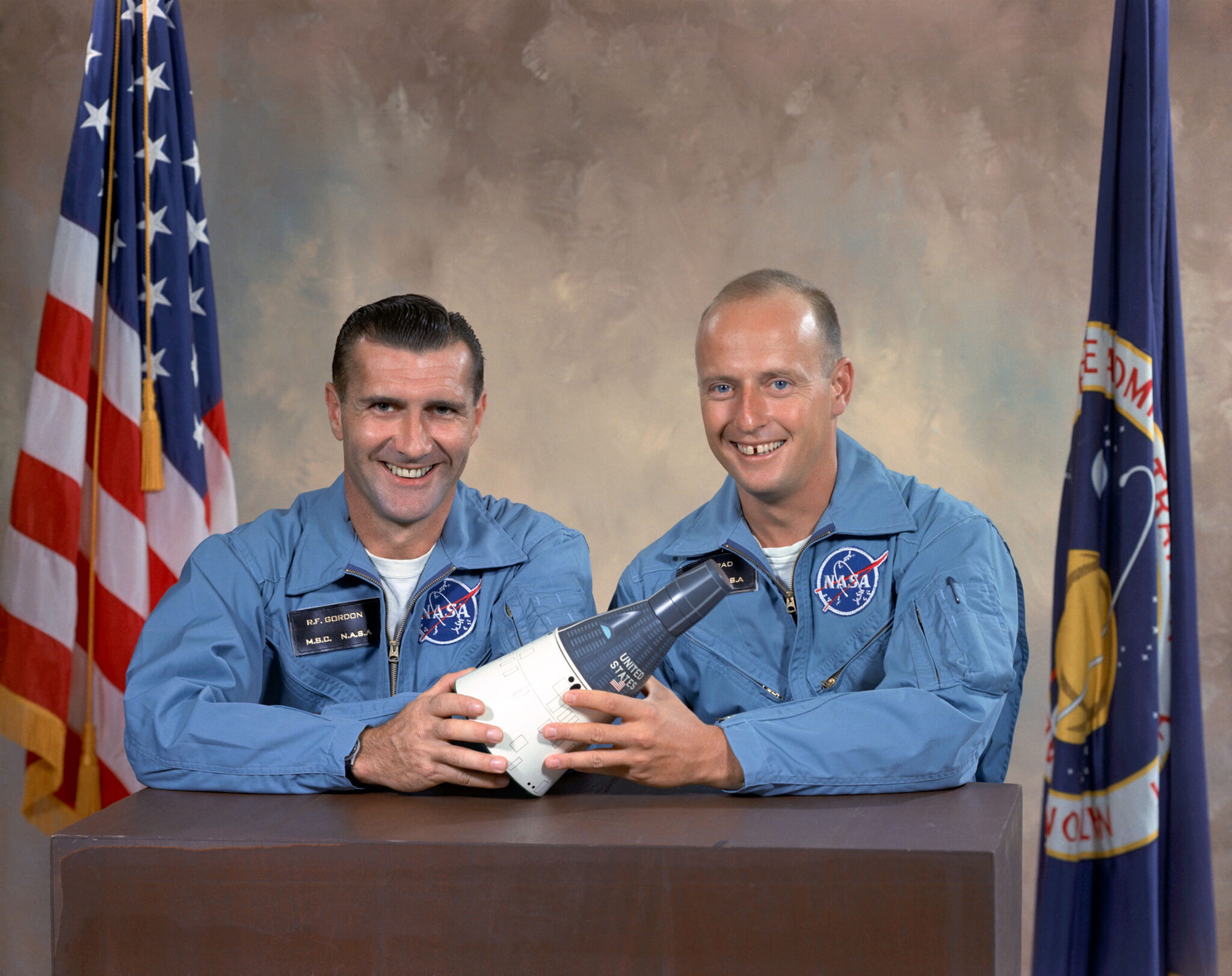
Dick’s first flight. He flew as Pilot beside Command Pilot Pete Conrad.

Mission dataPilot · R. F. Gordon
Launch
Sep 12, 1966 · 9:42 a.m. EST
Crew
Conrad · Gordon
Rendezvous
Agena target, first orbit
Spacewalk
44 min of a planned 115
Record altitude
853 miles
Splashdown
Sep 15, 1966 · 8:59 a.m. EST
Duration
2d 23h 17m · 44 orbits

Chapter 1 · 1965–1966

Training

Dick and Pete first served together as the backup crew for Gemini 8. That put them in line for the prime crew of Gemini XI, the ninth crewed flight of the Gemini program, planned for three days in orbit.

The flight plan was packed: a rendezvous and docking with an Agena target vehicle on the very first orbit, two spacewalks, docking practice, a tethered flight with the Agena, an automatic reentry, and a dozen scientific and technical experiments.

Chapter 2 · Sep 9–12, 1966

Launch Day

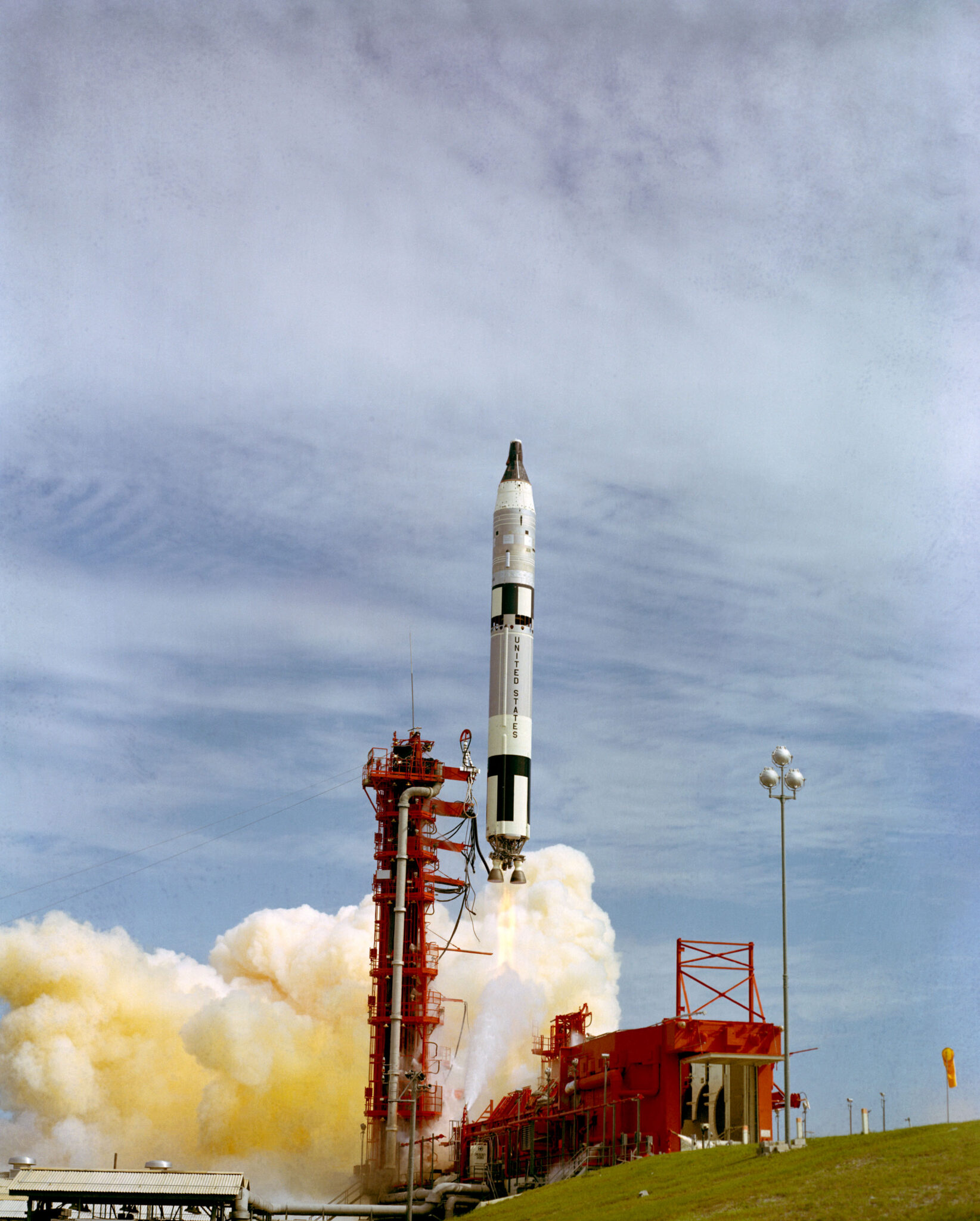
The countdown began on schedule on September 9, 1966, but it didn’t finish that way. After the booster was fueled, the launch crew found a pinhole leak in the first stage oxidizer tank, and the launch was reset for September 10.

The second try ended much later in the count. Conrad and Gordon were headed for Pad 19 when word came that the Atlas that would launch their Agena target, only 1,800 meters away, had a problem with its autopilot. When the hold stretched to an hour, the launch was postponed two more days.

On September 12 the crew climbed into their seats exactly on time. The hatches were closed, then Conrad’s had to be reopened: he suspected oxygen was leaking on his side of the cabin, and he was right. Once it was fixed, the count went on.

At 8:05 a.m. the Atlas roared off with the Agena. To catch it on the first orbit, Gemini XI had to leave the pad within a two-second window, the shortest of the Gemini program. It lifted off at 9:42:26.5 a.m. EST, half a second into the window.

Chapter 3 · Day 1

Rendezvous on the First Orbit

The Titan booster put Gemini XI on course with near-perfect accuracy. At booster separation, debris flew past the window. Gordon had warned himself not to look, but temptation got the better of him for a brief instant.

After five maneuvers to adjust their orbit, the Agena, whose blinking lights they had been watching in the darkness, flashed into sunlight over the Pacific and nearly blinded them. The crew scrambled for sunglasses, and Conrad eased the spacecraft to within 15 meters of the target’s docking cone. Over the coast of California, just 85 minutes after launch, they had made the first rendezvous on a first orbit, using less fuel than expected.

Then came something NASA had wanted for a long time: docking practice. Each man pulled away and drove back in, once in daylight and once in darkness. For the first time, the pilot in the right seat got to dock with a target vehicle. It was much easier, Conrad said, than in the trainer on the ground.

After six hours of hard but frustration-free work they powered down, ate a meal and got a “good night” from the ground. They slept and rested for eight hours and woke, as Dick put it, “bright-eyed and bushy-tailed.”

Chapter 4 · Day 2

The Spacewalk

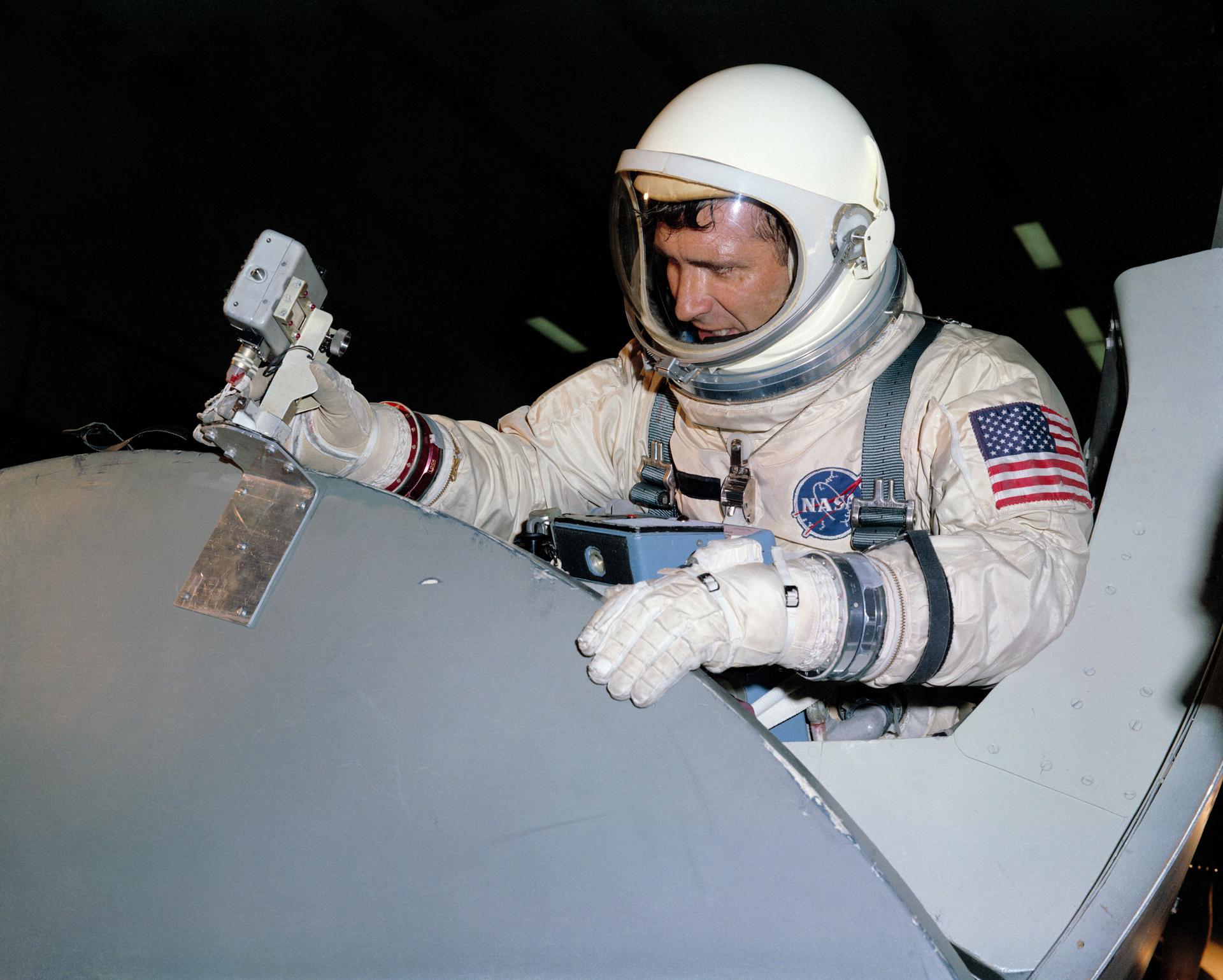
The crew had rehearsed suiting up so many times that they were ready in 50 minutes instead of the four hours allowed. Then Dick tried to snap a sun visor onto his faceplate. Conrad could fasten only the left side, and Dick wrestled the right snap for five minutes, cracking the visor in the process. He was winded before he left his seat. Even so, he opened the hatch and stood up 24 hours and 2 minutes into the flight, exactly on schedule.

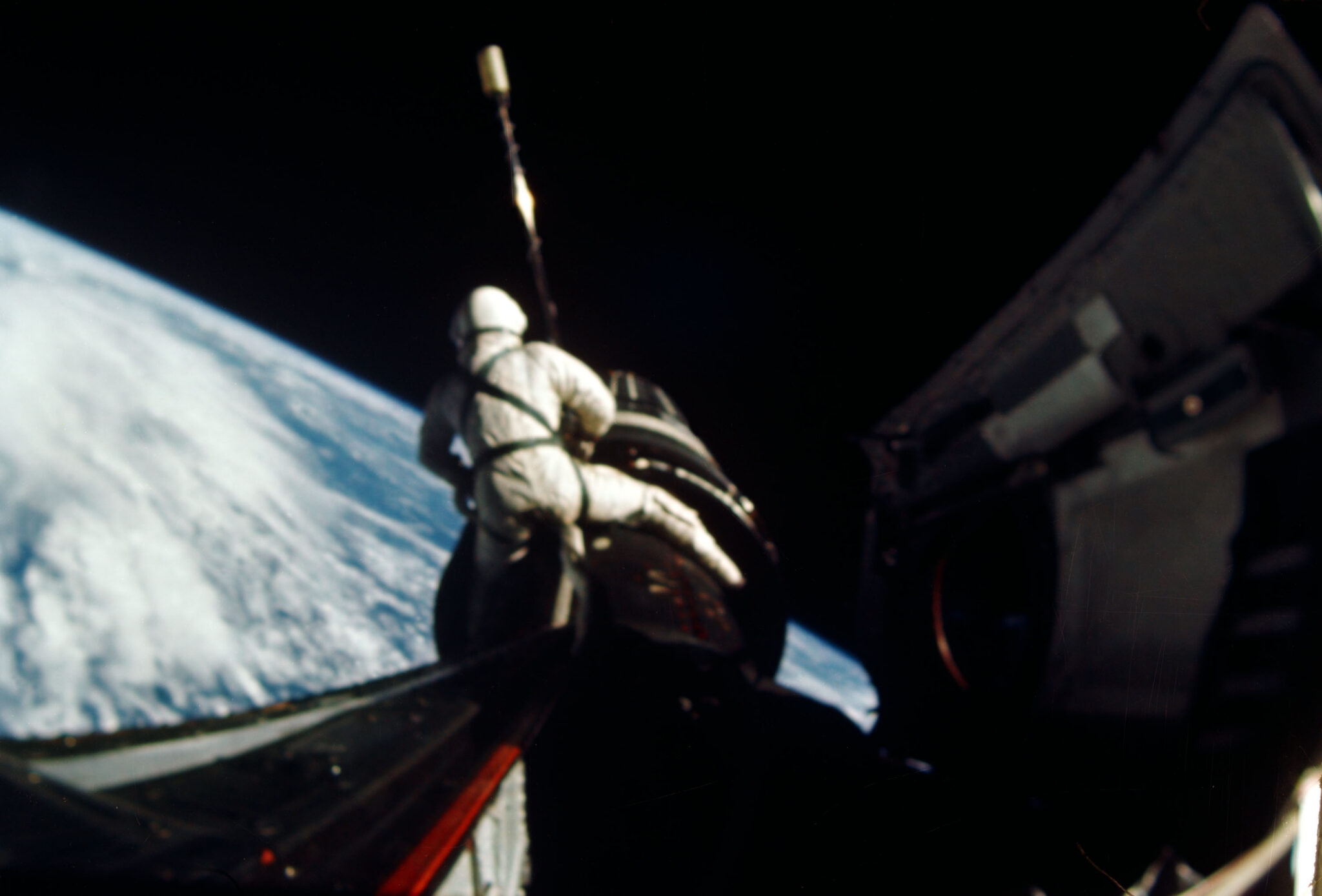
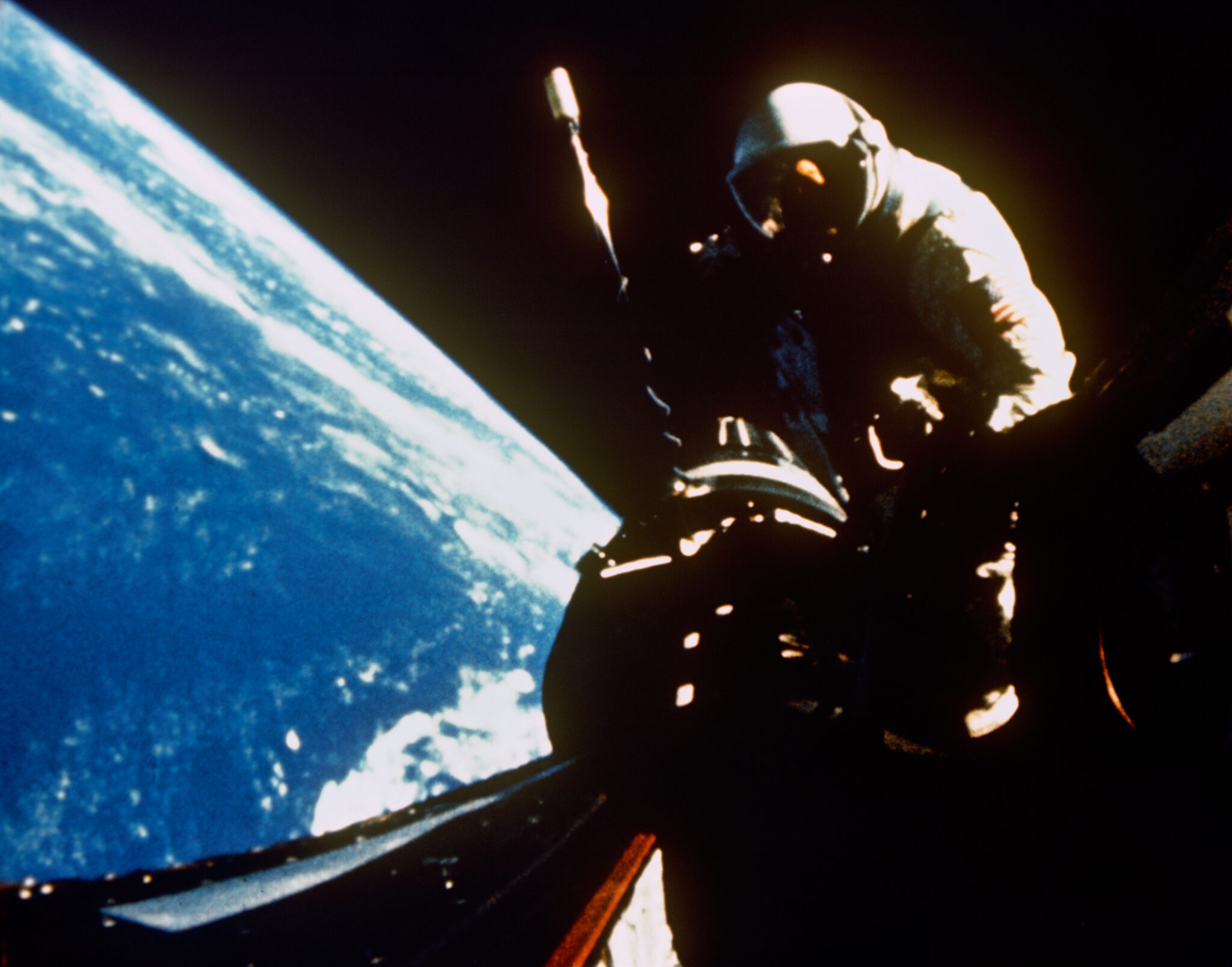
Everything not tied down floated up and out, Dick included, until Conrad grabbed a strap on his leg. He set up a handrail and a camera, then pushed himself forward and pulled himself astride the nose of the spacecraft to attach a 30-meter tether to the Agena. That is the “Space Cowboy” photograph.

In zero-g training flights he had wedged his feet and legs in place to free both hands. In orbit that didn’t work. He could hold on with one hand and work the tether clamp with the other, and it took six minutes to secure the line. Sweat streamed into his eyes, and Conrad could see he was running out of steam.

Conrad helped him back to the hatch, and with Dick’s right eye still burning they ended the spacewalk early, after 44 minutes of a planned 115. The lesson, that a spacewalker needs handholds and foot restraints, shaped how every later spacewalk was planned.

Looking back: “Gene Cernan warned me about this, and I took it to heart. I knew it was going to be harder, but I had no idea of the magnitude.”
Chapter 5 · Day 3 · Apogee 853 mi

Record Altitude

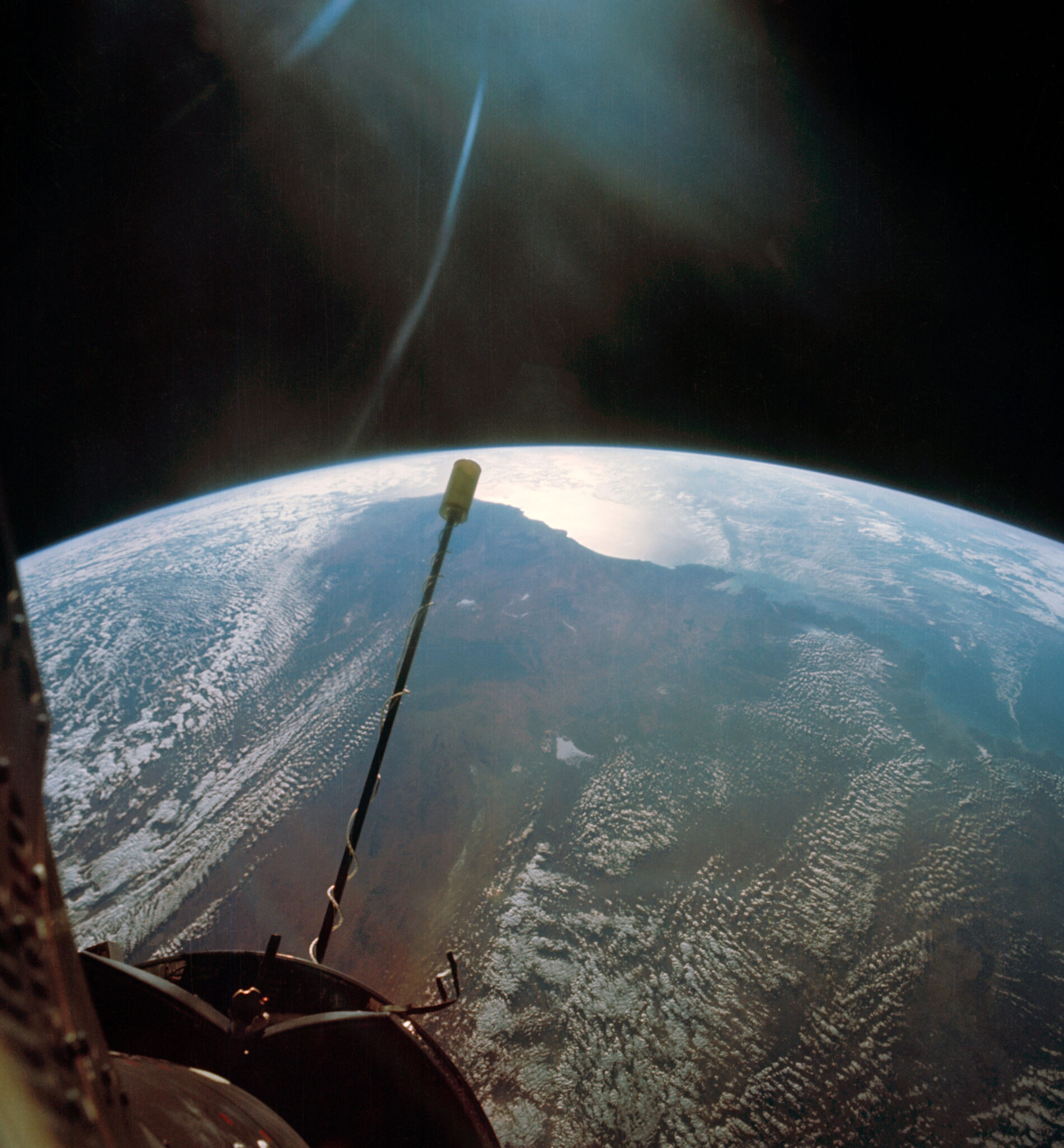
The next day the crew skipped breakfast to button up the cabin. On the 26th orbit, still docked, Conrad fired the Agena’s main engine for 26 seconds. The push threw them forward against their harnesses, and they watched the Earth fall away until they could see it whole, as a sphere, from 1,374 kilometers (853 miles) up. The altitude record stood until Apollo 8 flew to the Moon.

Two orbits later they fired the Agena again to come back down. Over Madagascar on the 29th orbit, Dick opened the hatch for a second time and stood up in it, held by a short tether so both hands were free. He mounted cameras and photographed the sky for about two hours. “Most enjoyable,” he said. The flight doctors called it “relatively uneventful.”

Then the crew undocked with the tether between the two vehicles and Conrad set them slowly turning around each other. The spin created a slight artificial gravity inside the cabin, the first time it had been shown in space. After a second rendezvous and one last docking, they left the Agena for good.

Saying goodbye to the Agena: “We were sorry to see that Agena go. It was very kind to us.”

Chapter 6 · Sep 15, 1966

Recovery

Conrad joked that Mission Control could send up a tanker; they would be happy to refuel and keep working. There was one more first to fly, though: an automatic reentry. Earlier Gemini commanders had flown the spacecraft down by hand, following the computer’s directions. This time the computer would fly it.

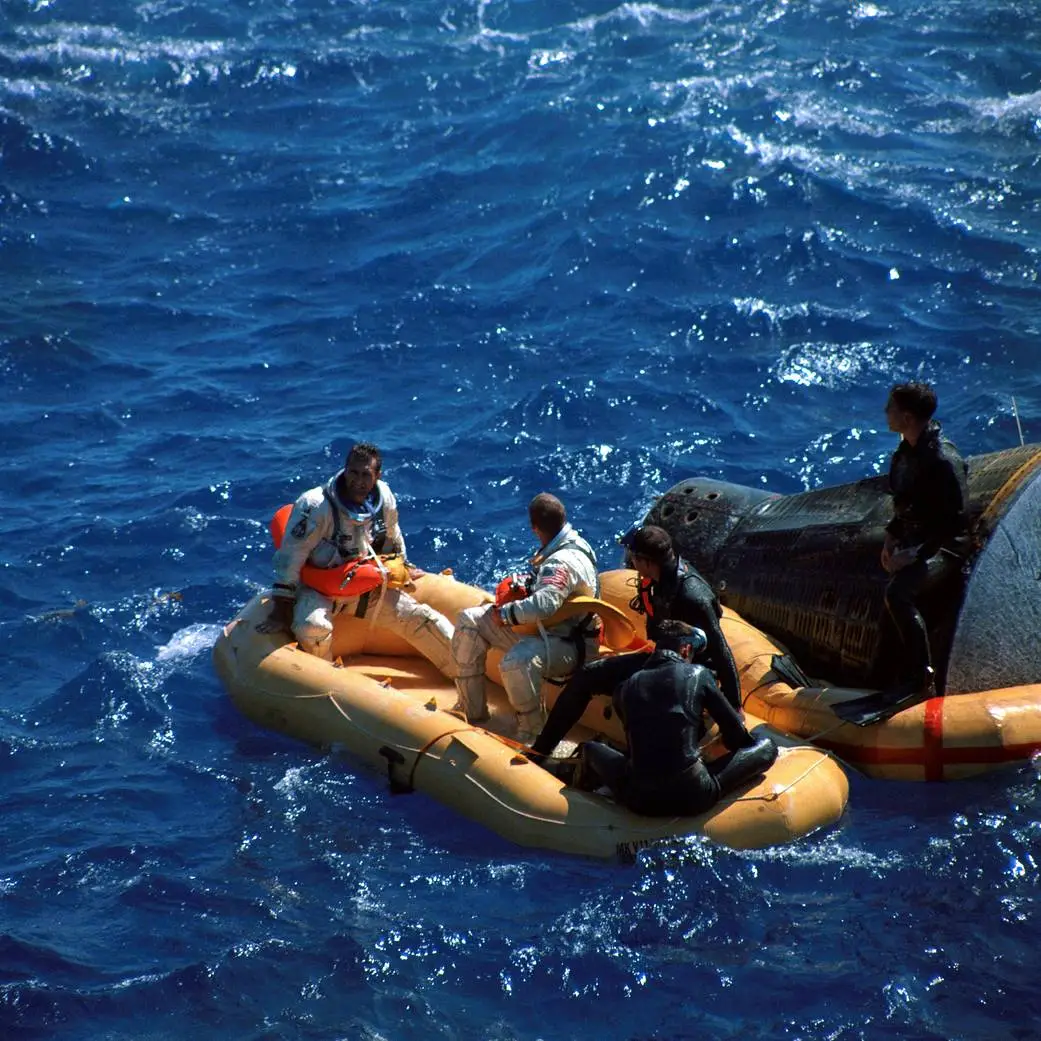
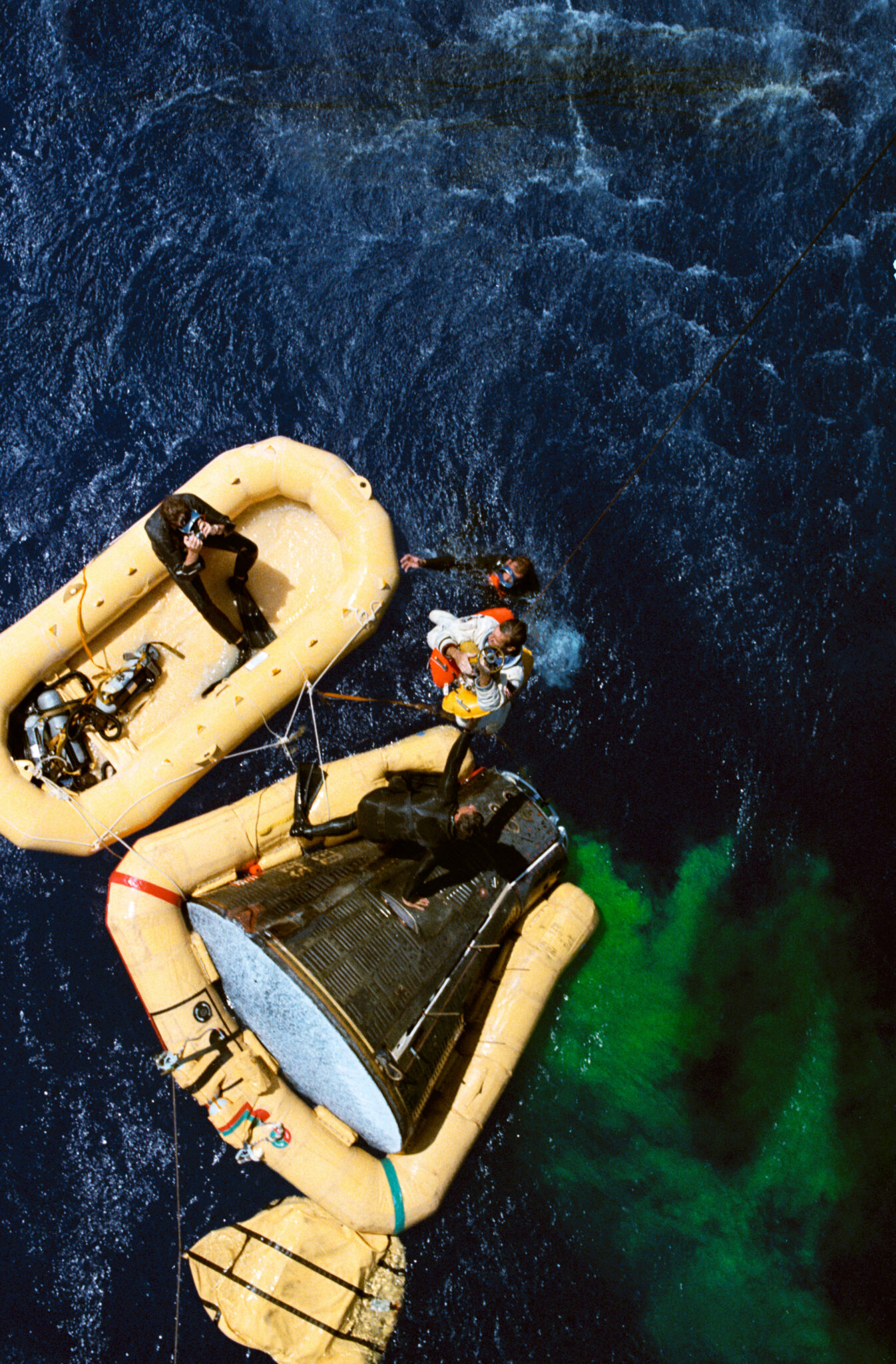
On September 15, in the 44th orbit, the retrorockets fired. Conrad watched the computer closely, then let go of his hand controller and put the system on automatic. At times the spacecraft seemed to hesitate, almost like a person, before accepting its orders, but it flew beautifully and landed within 4.6 kilometers of the recovery ship USS Guam, 71 hours and 17 minutes after launch.

Every primary objective had been met. The last docking with the Agena had been added during the flight, because they had fuel to spare.