Dick GordonGemini XI · Apollo XII

Missions / Apollo XII

Apollo XII

The second Moon landing. Dick flew the Command Module, Yankee Clipper.

Mission dataCMP · R. F. Gordon
Launch
Nov 14, 1969 · 11:22 a.m. EST
Crew
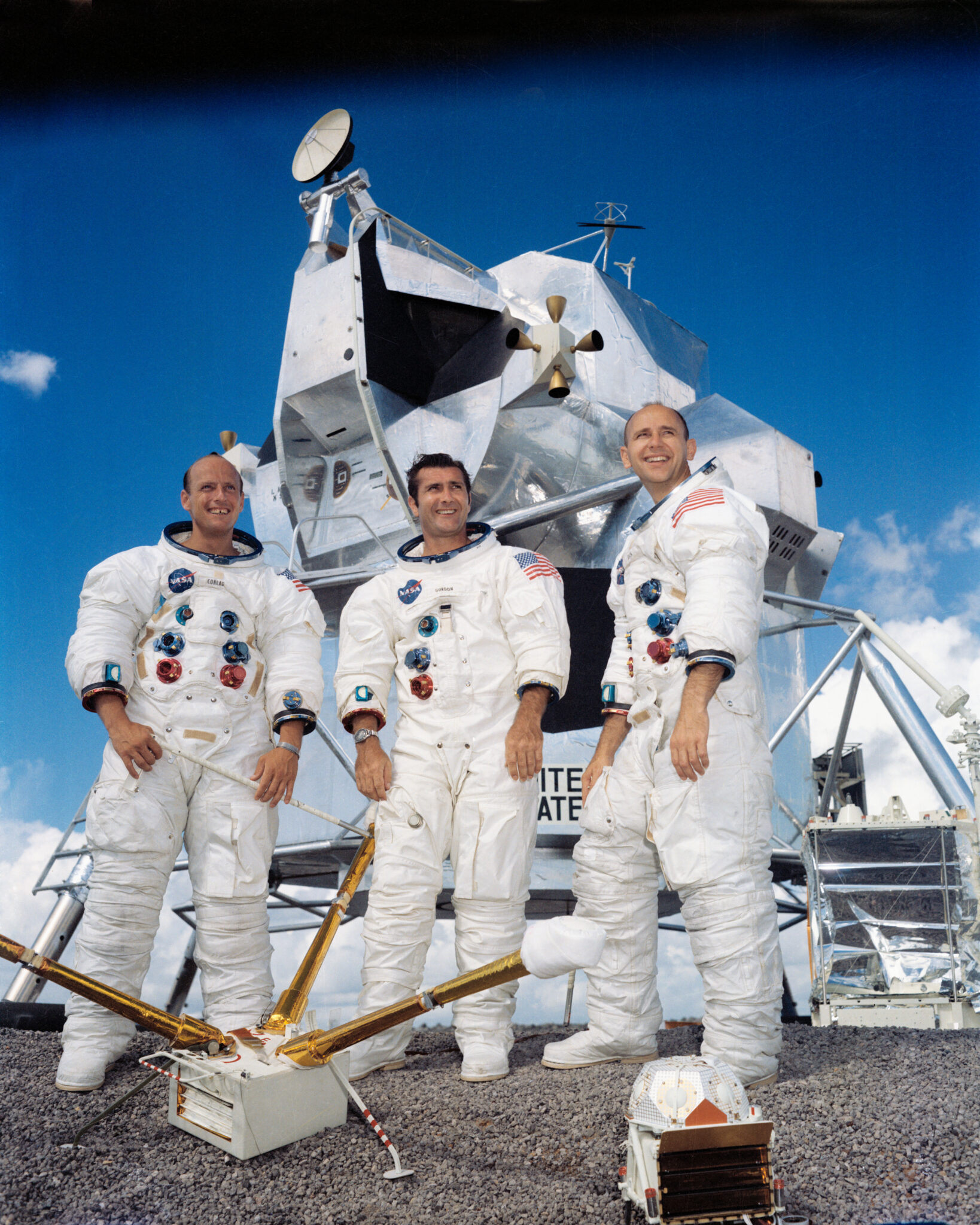
Conrad · Gordon · Bean
Lunar landing
Nov 19, 1969 · Ocean of Storms
Lunar orbits
45 · 3d 17h 2m
Splashdown
Nov 24, 1969 · 3:58 p.m. EST
Duration
10d 4h 36m

Chapter 1 · Fall 1969

Before Launch

Apollo 11 had come down about four miles from its target. Geologists needed better than that, so Apollo XII’s first job was to prove a pinpoint landing could be done, by setting down beside Surveyor III, an unmanned probe that had landed in the Ocean of Storms two years earlier.

Conrad and Bean would set up the Apollo Lunar Surface Experiment Package, a science station with a seismometer for moonquakes, a magnetometer, and sensors for the Moon’s thin atmosphere and for high-energy particles, and they would bring home pieces of Surveyor for study. Dick would fly Yankee Clipper and keep it waiting in lunar orbit.

Chapter 2 · Nov 14, 1969

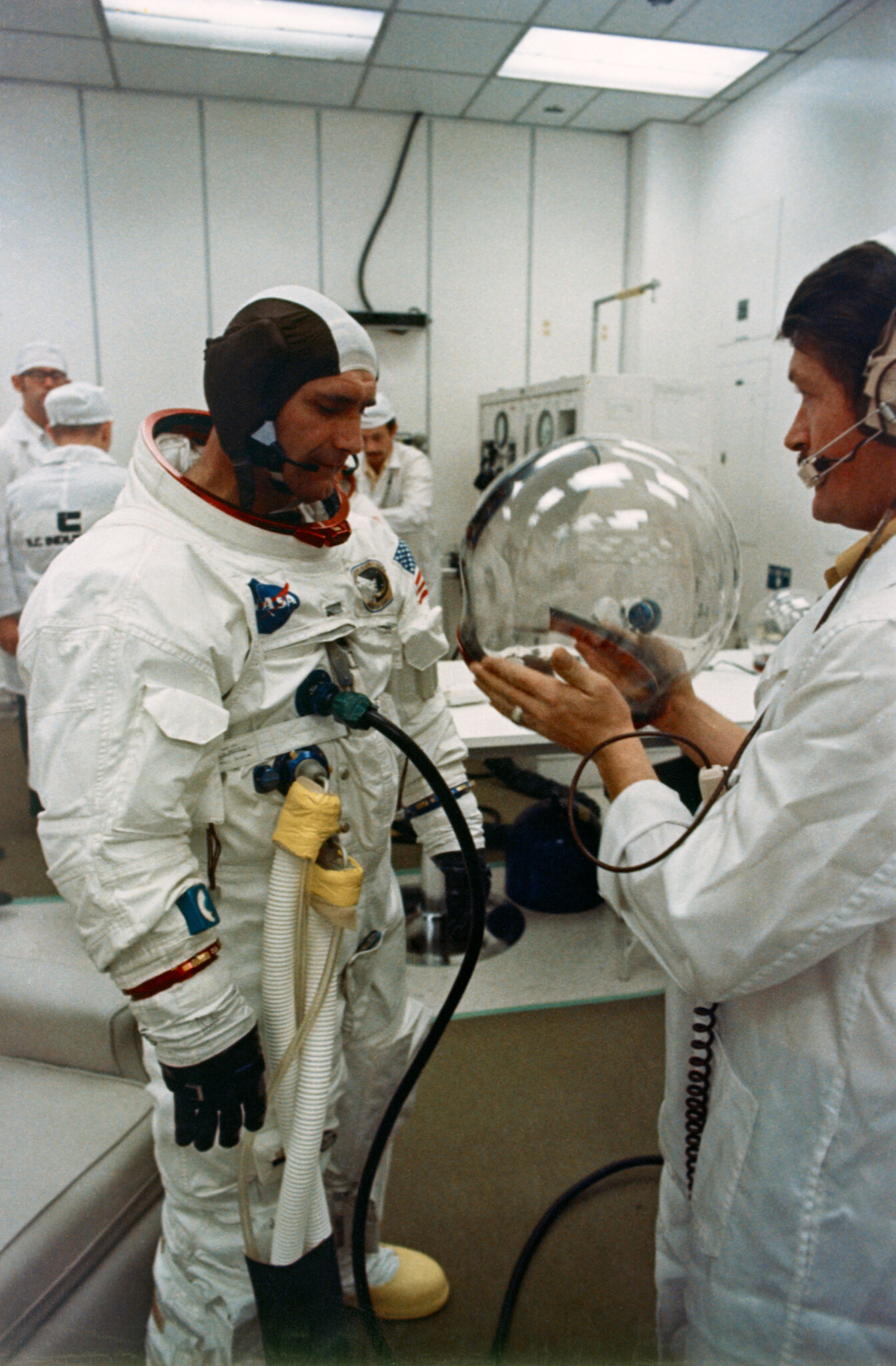
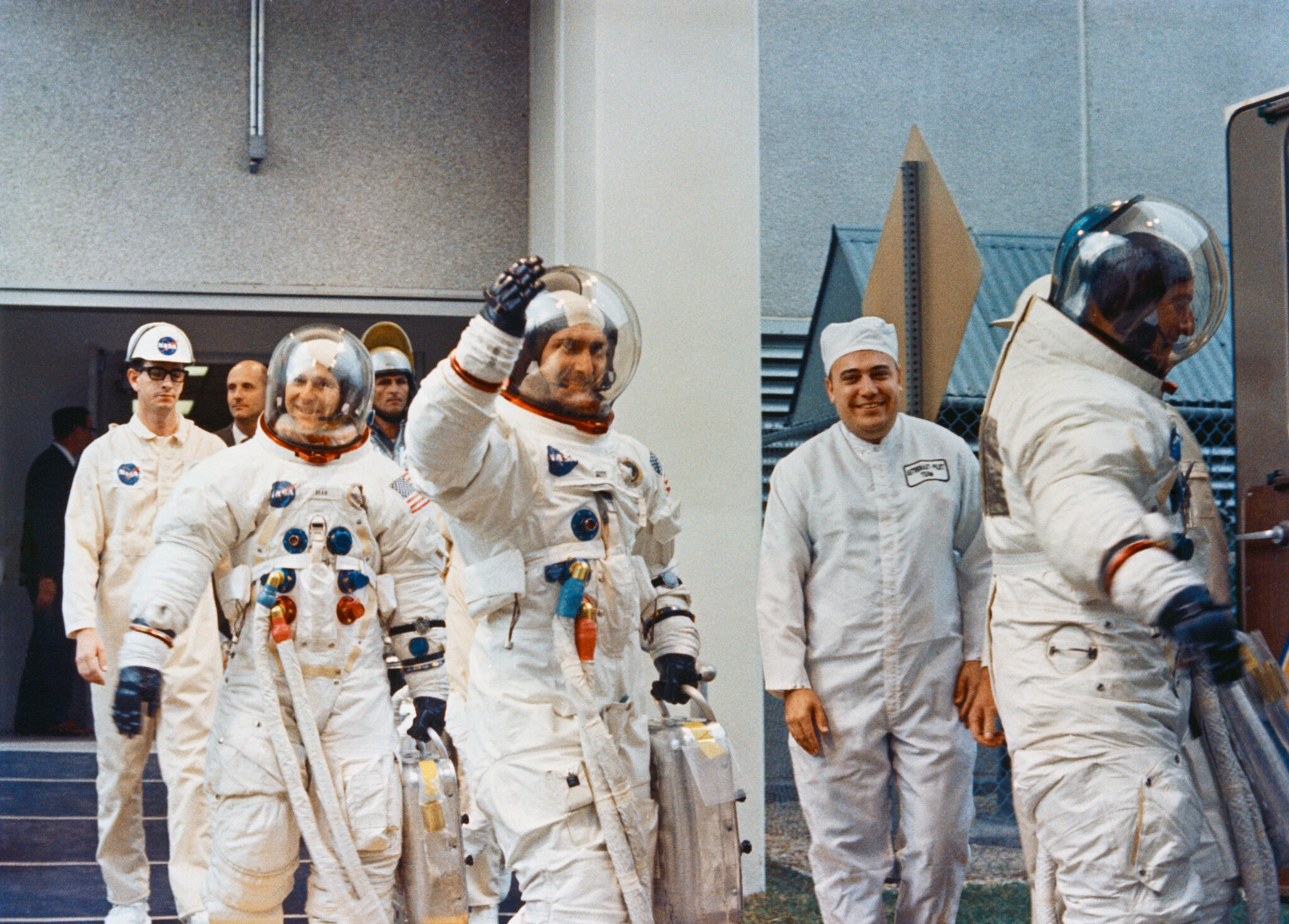
Launch Day

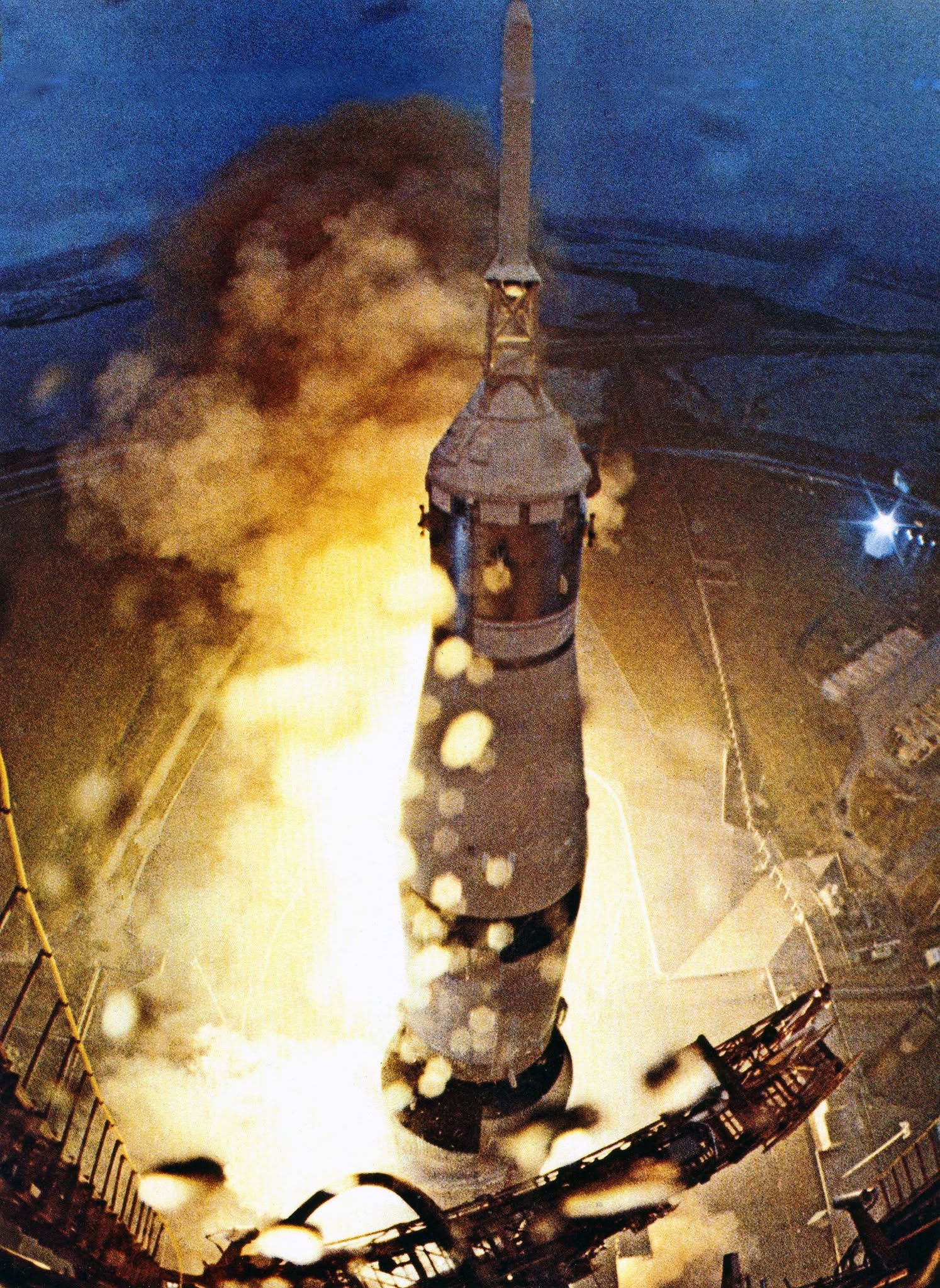
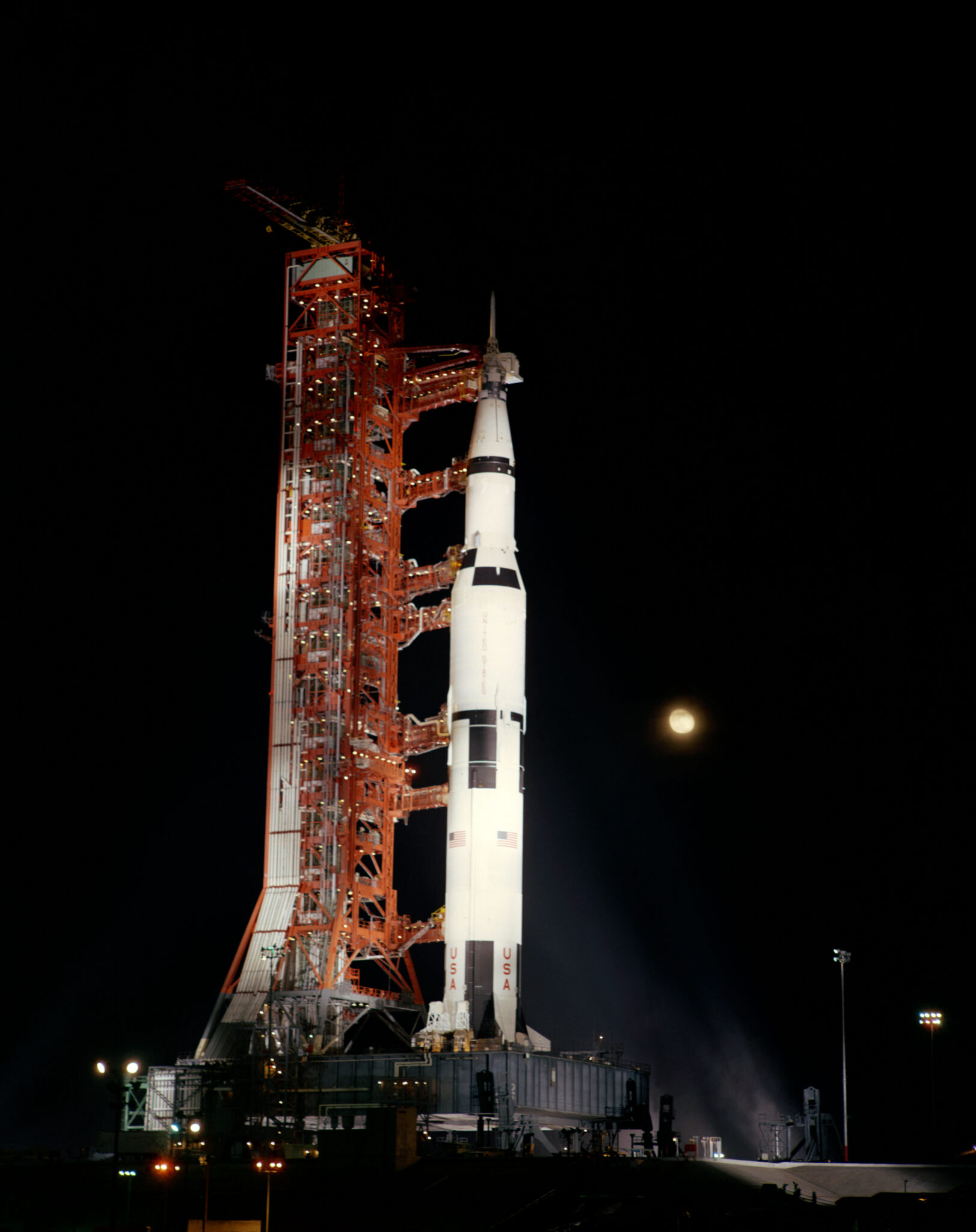
Launch day was cold, cloudy and wet. Despite the rain a large crowd came to watch, including President and Mrs. Nixon, the only time a sitting president saw an Apollo launch.

From his seat, Conrad could see rainwater leaking between the boost protective cover and the spacecraft and running across his windows. Apollo was built to launch in the rain, and Conrad, a Navy captain, had said he was ready for NASA’s “all weather” testing. It didn’t take long after liftoff for him to almost regret it.

Why fly in the rain? “We were ready to fly, the bird (Saturn V) was ready to fly and mission control gave us the ‘Go’. So, we went.”

Chapter 3 · Ascent

The Lightning Strike

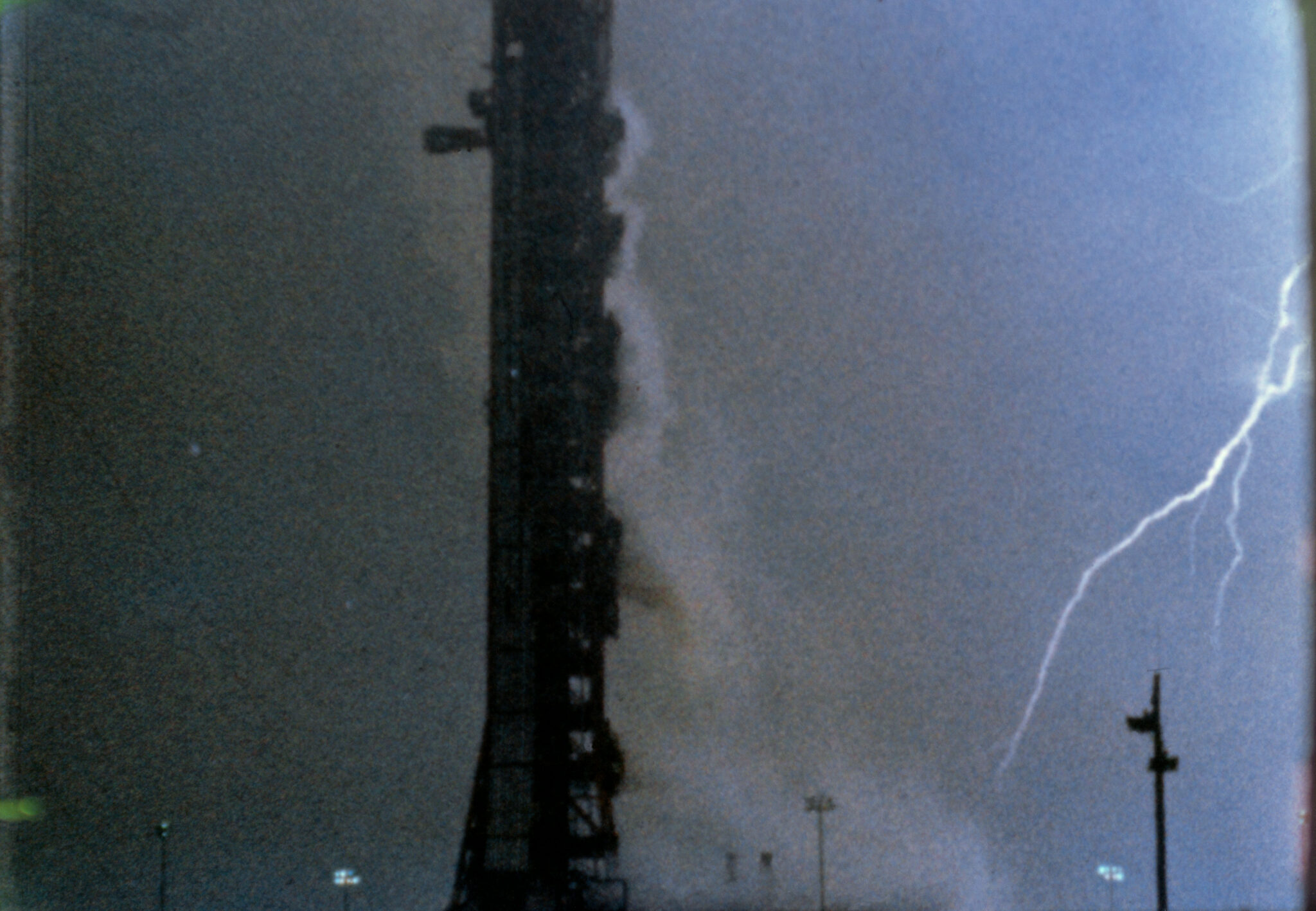
Liftoff came on schedule at 11:22 a.m. Thirty-six seconds later, about 2,000 meters up, the Saturn V was struck by lightning; its long trail of ionized exhaust had given the charge a path. Sixteen seconds after that, a second strike hit at 4,400 meters.

“I was aware of a white light,” Conrad recalled. “The next thing I noted was that I heard the master alarm ringing in my ears, and I glanced over to the caution and warning panel and it was a sight to behold.” Nearly every electrical warning light was on, and the guidance platform had dropped out.

In Mission Control, flight controller John Aaron recognized the pattern from a simulation a year earlier and called for an obscure switch: “SCE to Aux.” Hardly anyone knew what it meant. Al Bean knew where the switch was, and moments later the data was back.

They reached Earth orbit, realigned the guidance system and got the go for the Moon. What the crew wasn’t told was that Mission Control feared the lightning had damaged the pyrotechnics that deploy the parachutes. That wouldn’t affect the landing, so the mission went on. “Al Bean, you’re on your way to the Moon,” Conrad said. “Yeah,” Bean answered. “Y’all can come along if you like.”

What happened when you got hit by lightning? “We had more warning lights than we ever saw during training. But we all did our jobs. Pete was telling mission control about our situation. I was making sure the booster (Saturn V) was functioning properly. And Al was busy trying to get the electrical system back on line.”

Were you scared? “It really wasn’t a frightening experience because we were too busy taking care of business to think about it.”
Chapter 4 · 60 nautical miles up

Alone in Yankee Clipper

Three and a half hours into the flight, Dick turned Yankee Clipper around and pulled the Lunar Module, Intrepid, from its place atop the third stage. To reach their landing site they left the “free return” path earlier crews had flown, which would have looped them around the Moon and home if anything went wrong.

Eighty-three and a half hours after liftoff, the main engine burned for almost six minutes to put them into lunar orbit, and a second burn made the orbit circular at 60 nautical miles (111 kilometers). They photographed Fra Mauro, Apollo 13’s planned landing area, and Conrad told Houston that “good Captain Shaky,” Jim Lovell, could relax: “We’ve got his pictures.”

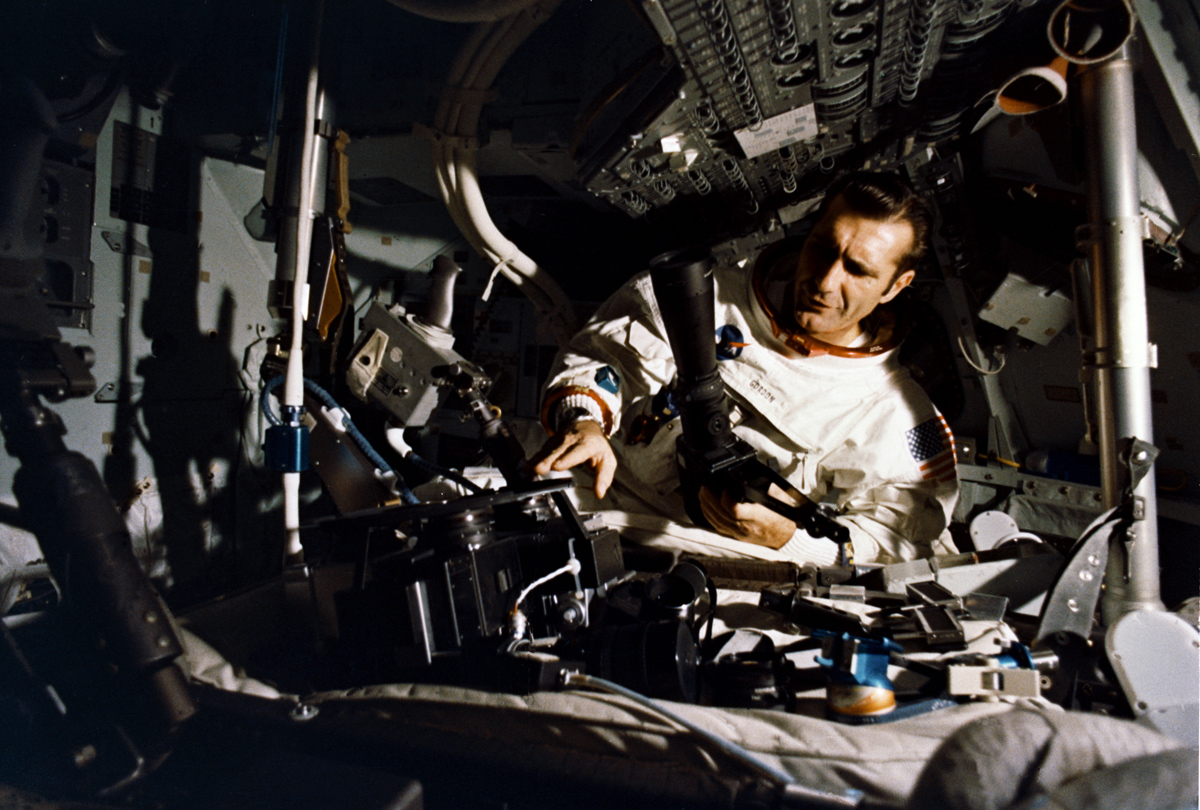
Then Conrad and Bean moved into Intrepid. Dick turned the joined spacecraft, released the docking latches and backed Yankee Clipper away. For about a day and a half he circled the Moon alone, photographing future landing sites, keeping the ship in order and flying the engine burns.

Did you get lonely? “Actually, I didn’t have time. I was always doing something. Besides, with those two guys gone I finally had some room to move around.”

Chapter 5 · Nov 19–20, 1969

Ocean of Storms

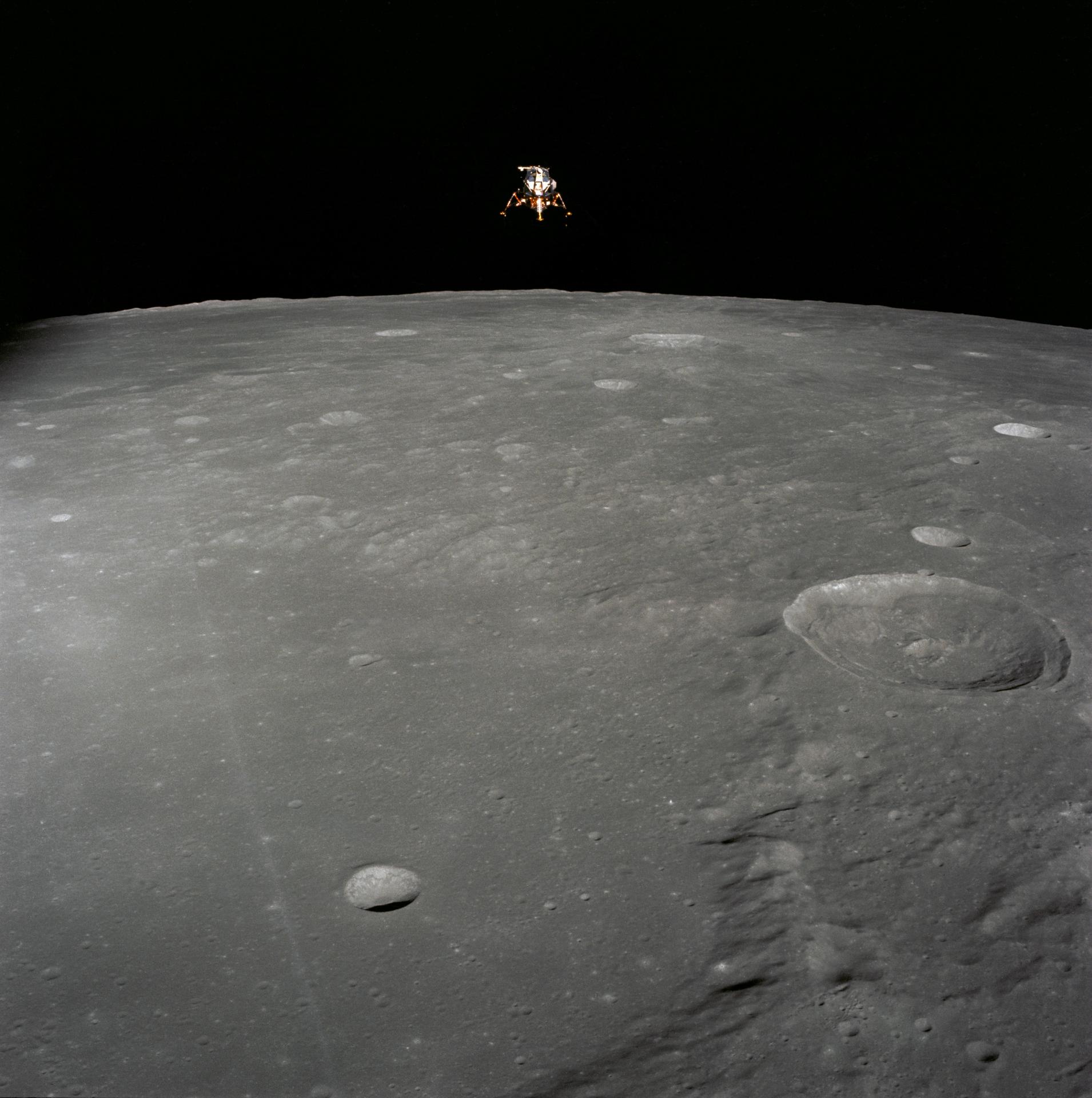
Intrepid came down toward a pattern of craters the crew called the Snowman. Surveyor III sat halfway up the wall of the crater that made its middle. “Hey, there it is! There it is!” Conrad called when he first saw it. “Right down the middle of the road!” Dust hid the surface for the last 50 feet, and at 1:54 a.m. EST on November 19 he set Intrepid down blind, 535 feet (163 meters) from Surveyor. It was the pinpoint landing they had come to make.

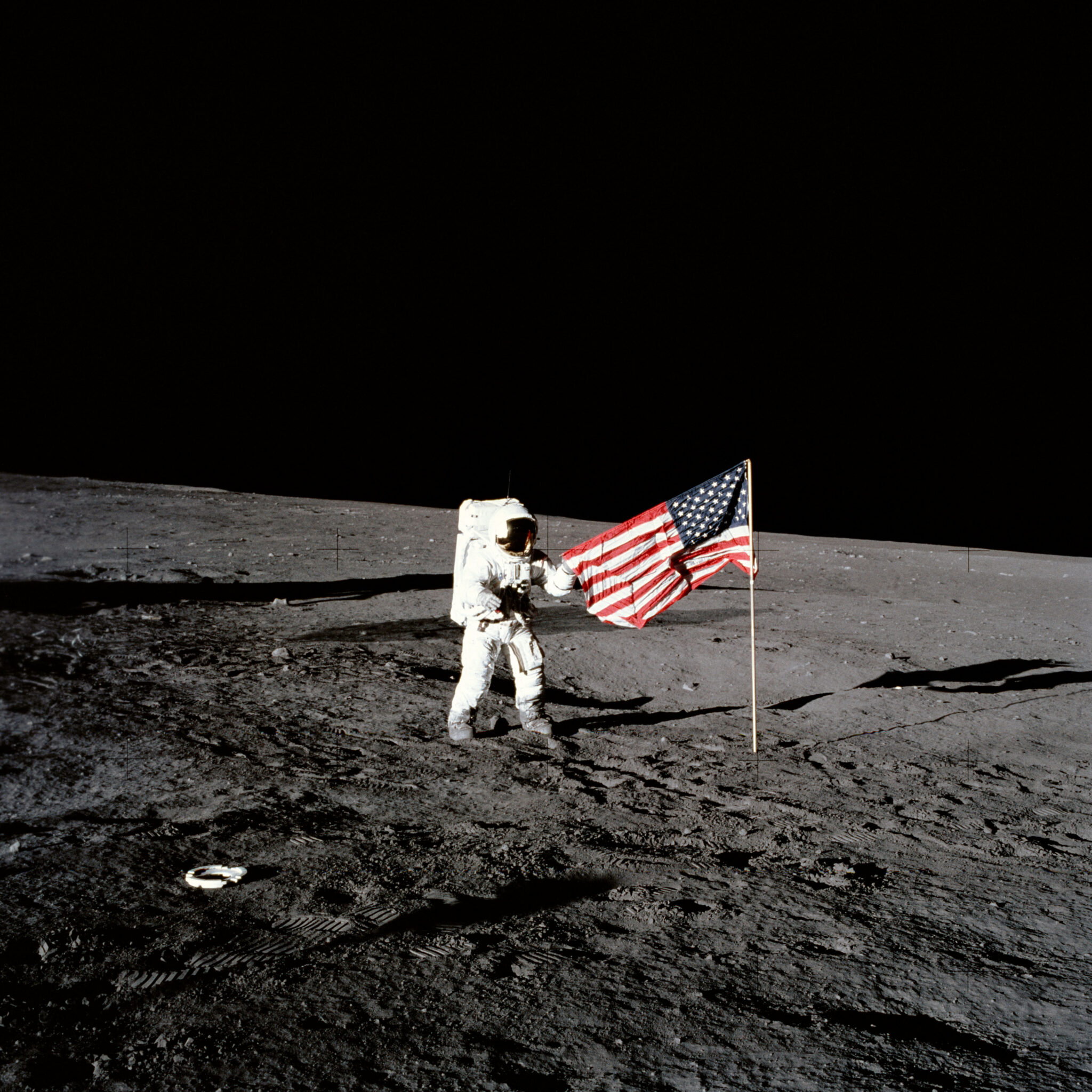
Conrad stepped off the ladder with words he had written months earlier, to win a $500 bet with an Italian journalist who believed NASA scripted what astronauts said: “Whoopee! Man, that may have been a small one for Neil, but it’s a long one for me.” He never collected.

On the first moonwalk they set up the science station 130 meters from the lander. The television camera failed early, probably after it was pointed toward the Sun. Their cuff checklists held surprises from the backup crew, Dave Scott and Jim Irwin: cartoons of Snoopy, and a few pinups annotated in proper geological terms.

On the second moonwalk they covered more than a kilometer, reached Surveyor III and removed its television camera, its scoop and pieces of cable and tubing for study back on Earth. In all they spent 7 hours and 45 minutes outside and came back looking, Conrad said, like “a couple of bituminous coal miners.” On the morning of November 20, Intrepid lifted off to rejoin Yankee Clipper.

Chapter 6 · Transearth

Coming Home

On the way up, Conrad let Bean fly Intrepid for a few minutes on the far side of the Moon, where no one in Houston would know. Bean was the lunar module pilot in name, but the commander did all the flying.

When Dick opened the tunnel after docking, he saw two dim figures floating in a cloud of moon dust. He wouldn’t let them into his “nice clean spacecraft” until they had taken off and bagged their filthy suits, partly to protect the electronics and partly, perhaps, to give his friends a hard time. Conrad and Bean came aboard the same way they had entered the world.

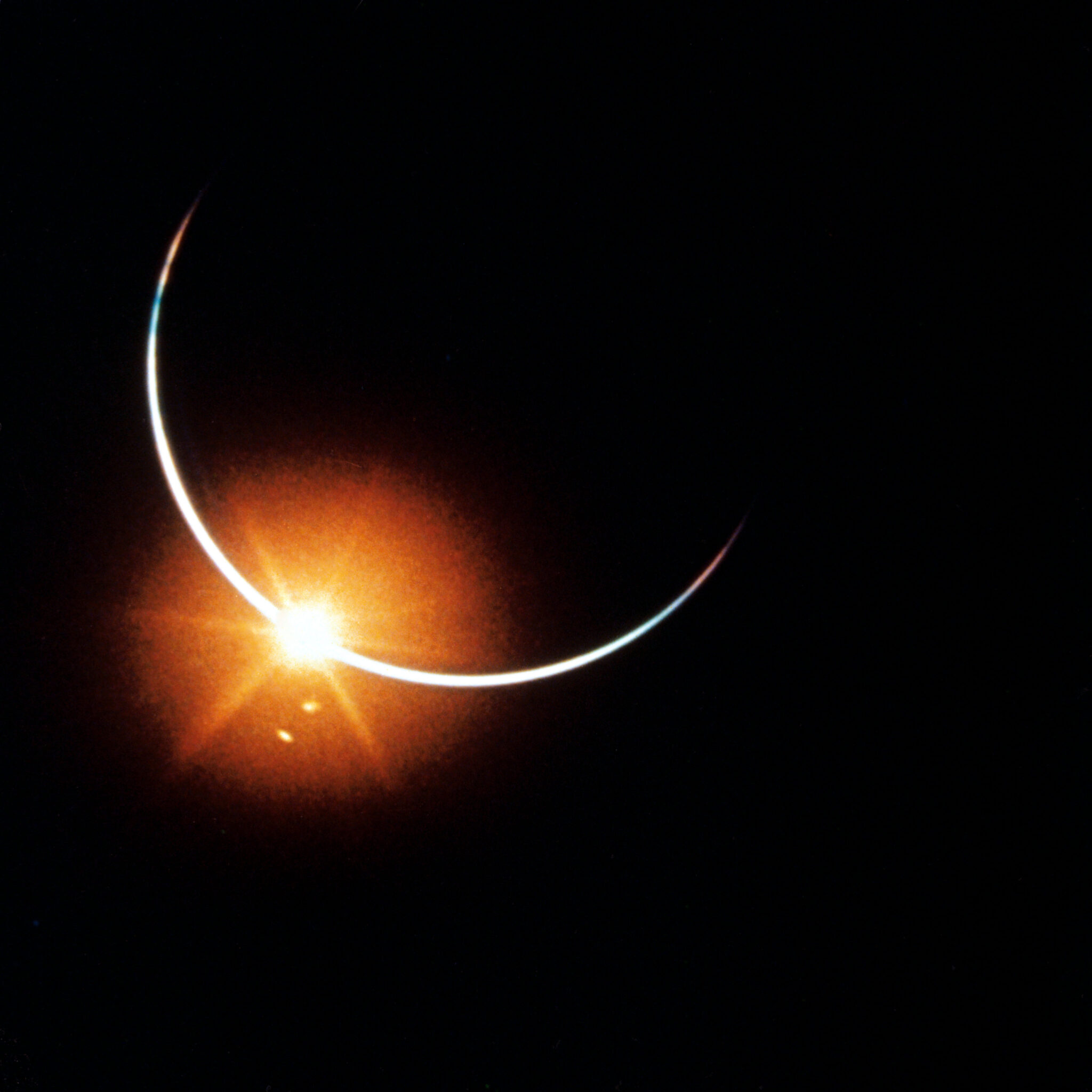
Mission Control then crashed the empty Intrepid into the Moon to calibrate the seismometer left on the surface. The Moon rang for almost an hour, like a struck church bell, and puzzled the scientists. Yankee Clipper stayed in orbit for 11 more revolutions, photographing sites for Apollo 14 and 15, then headed home on a three-day voyage. On the way, the crew watched the Earth pass in front of the Sun.

How warm did it get inside during reentry? “Around 75 degrees. We had a heat shield that was designed to dissipate heat by the process of ablation.”

You looked like a big meteor, right? “Yes. It was quite a show out the spacecraft window. Lots of blue-greens, yellows and oranges trailing behind the spacecraft as far as the eye could see.”

Chapter 7 · Nov 24, 1969

Recovery

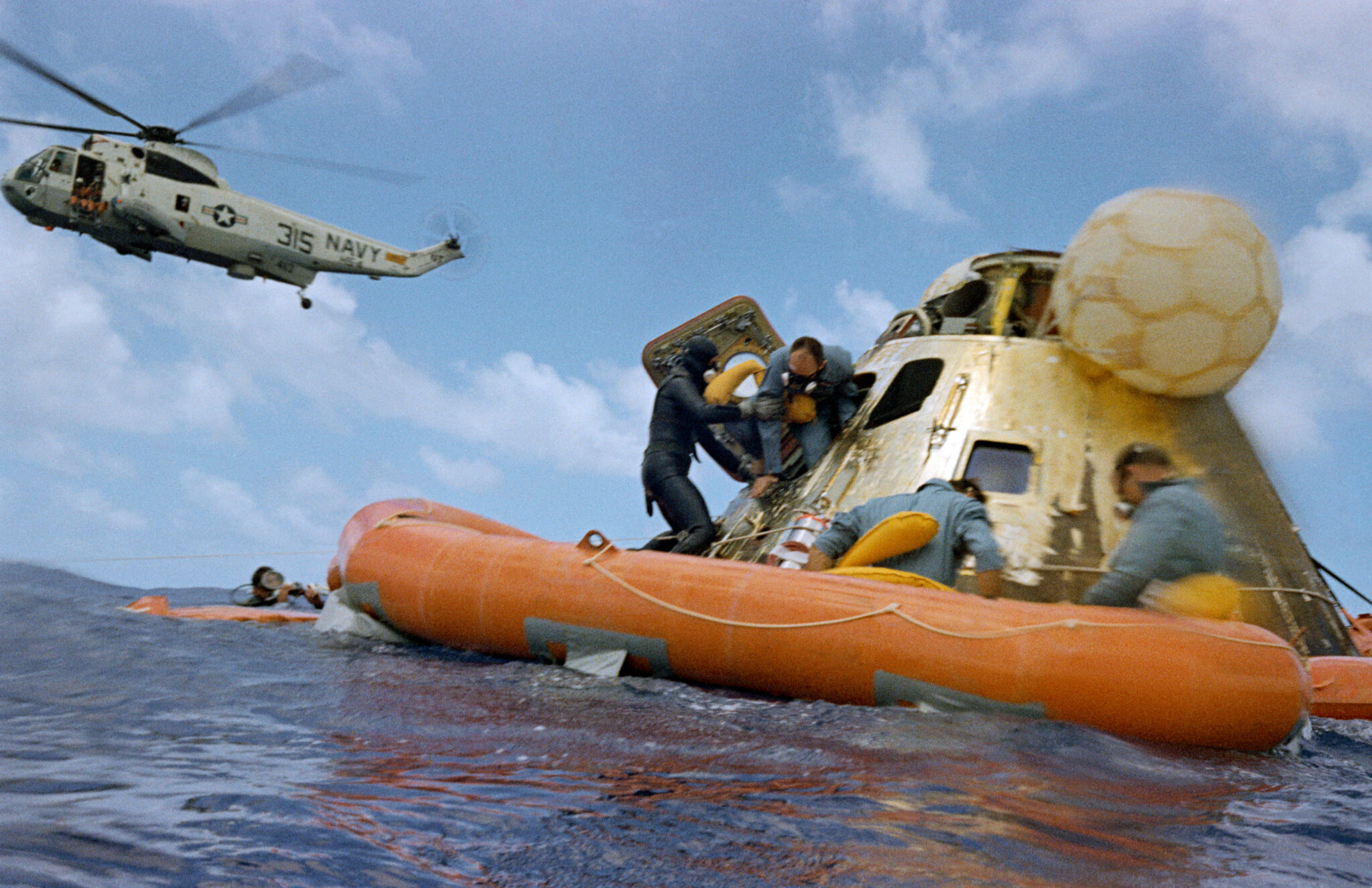
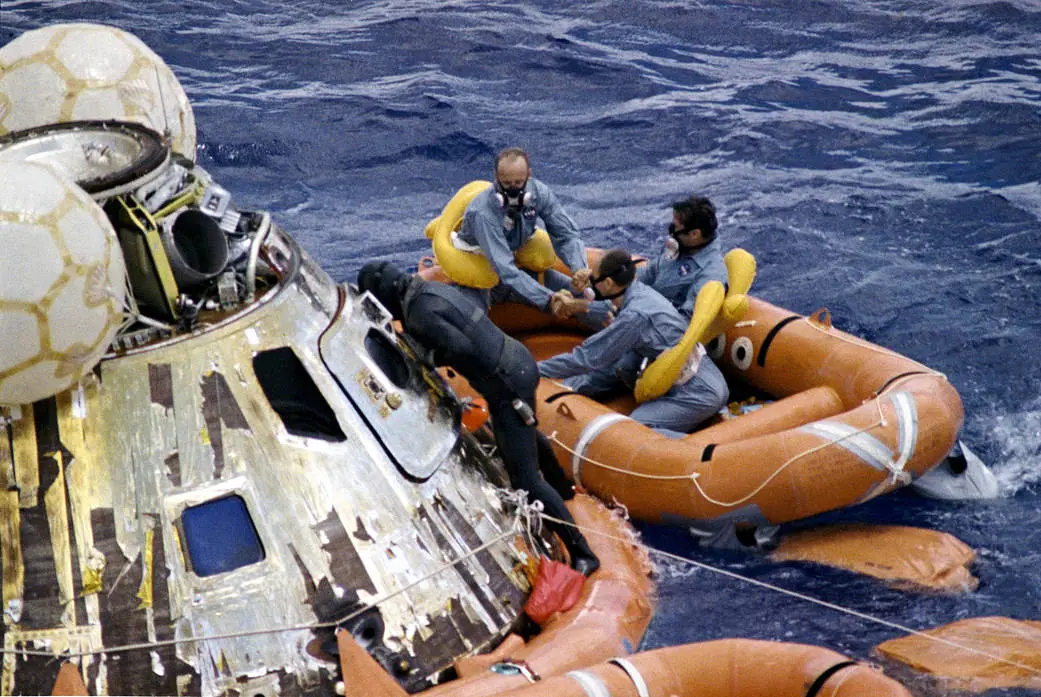
Apollo XII splashed down in the Pacific about 600 kilometers (375 miles) east of Pago Pago, 3.5 kilometers from the recovery ship USS Hornet. The parachutes worked; the lightning had not hurt them. The landing was rough, though: a 16 mm movie camera broke loose and struck Al Bean on the forehead, and Conrad bandaged the cut.

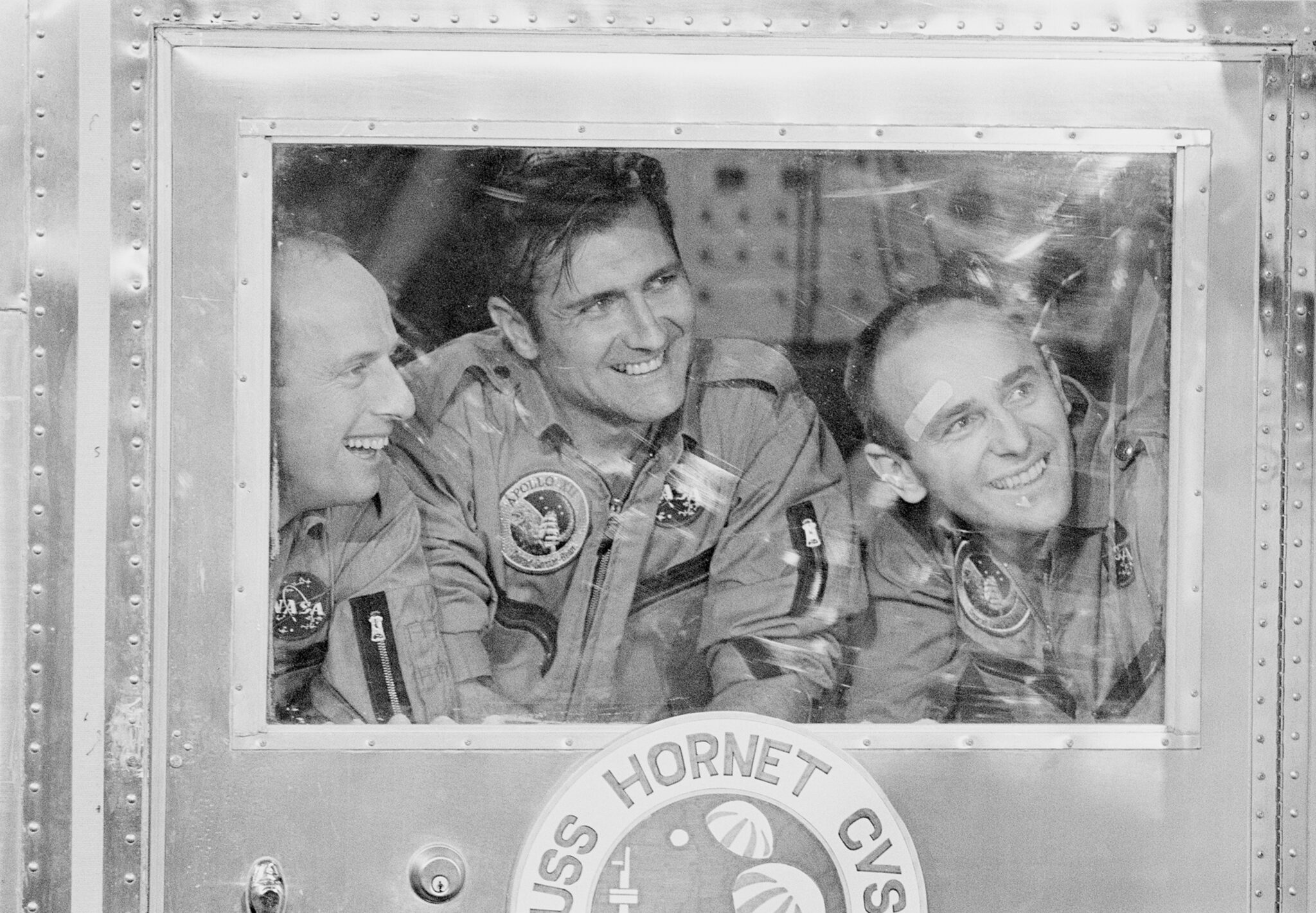
Swimmers handed in respirators and coveralls, and the crew climbed out into the raft. After four days aboard ship to Hawaii and a flight to Houston, Conrad, Bean and Gordon began 11 days of quarantine in the Lunar Receiving Laboratory on November 29.

The mission was a complete success. The pinpoint landing meant astronauts could now go where scientists wanted them to. The crew brought home nearly 75 pounds (34 kilograms) of lunar samples, and the instruments they left behind kept sending data.

Further reading